

How Do No-WiFi Cameras Maintain Footage Continuity?


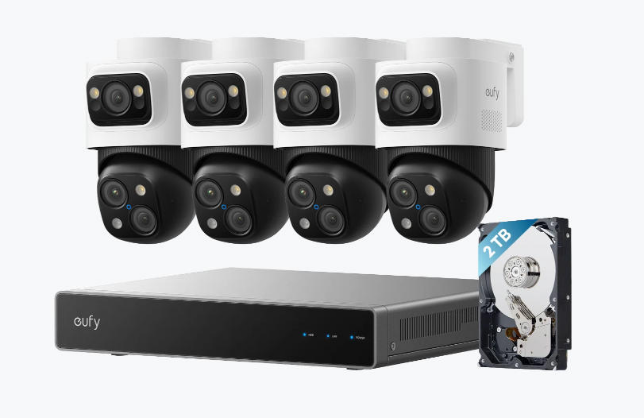
No-WiFi security systems remain popular for locations that need uninterrupted recording without depending on signal strength, router performance, or network congestion. Their reliability comes from stable wired connections, dedicated storage, and local processing that keeps footage flowing even when the home’s internet goes offline. A security camera without wifi protects recording continuity by removing the wireless variables that often interrupt cloud-dependent systems. Modern platforms such as the eufy PoE NVR Security System S4 Max show how far wired solutions have evolved. With triple-lens bullet-PTZ cameras, synchronized auto-tracking, and a local AI agent, the system maintains 24/7 footage even in demanding environments. Understanding the mechanisms behind this consistency helps users choose the right setup for remote properties, offices, and security-critical spaces.
How Wired Architecture Ensures Recording Continuity?
A Stable Power and Data Path That Cannot Be Interrupted
PoE (Power over Ethernet) systems transmit power and data through a single, shielded cable. This means the camera never relies on fluctuating Wi-Fi signals or battery cycles and instead maintains a constant electrical supply. The wired connection also protects the data pathway from interference caused by walls, distance, neighboring networks, or household appliances. With uninterrupted power, the camera can sustain 24/7 recording without gaps. In solutions like the S4 Max, this stability becomes even more important because the triple-lens bullet-PTZ design requires continuous energy for wide-angle coverage and PTZ movement. When the camera detects activity, it needs immediate power to activate auto-zoom, track subjects, and record high-resolution footage. A wired backbone ensures these processes happen smoothly.
Localized Storage That Protects Footage from Network Failures
A no-Wi-Fi camera stores footage locally instead of pushing it to the cloud. This prevents drops in recording when the internet slows or disconnects. The NVR in the S4 Max includes a pre-installed hard drive that enables nonstop, long-form recording. When a camera captures motion, the footage is written directly to the system’s internal storage in real time. Users do not rely on upload speeds, making the recording process more predictable. Local storage also supports multiple data streams from several cameras at once. For example, the S4 Max can expand up to 16 channels, handling footage from both bullet-PTZ and turret cameras. Because each stream goes straight to the NVR, recording remains uninterrupted even when the household network undergoes maintenance or outages.
Synchronized Cameras That Transfer Tracking Seamlessly
When recording security footage, continuity also depends on whether the system can follow a subject across viewpoints. No-WiFi systems with multi-camera coordination excel in this scenario. The S4 Max provides live cross-cam tracking, meaning one camera hands off the subject when it reaches the edge of its frame, and another takes over instantly. This handoff prevents blind spots and preserves the timeline of events. The bullet-PTZ camera contributes to this continuity with a 4K wide-angle lens providing a full scene overview and a secondary PTZ lens offering 8× auto-zoom for detailed tracking up to 164 ft. These synced views create unbroken footage, making it easier to review events without piecing together disconnected clips.
How Local Intelligence Strengthens Reliable Monitoring?
Real-Time Processing That Does Not Depend on Cloud Servers
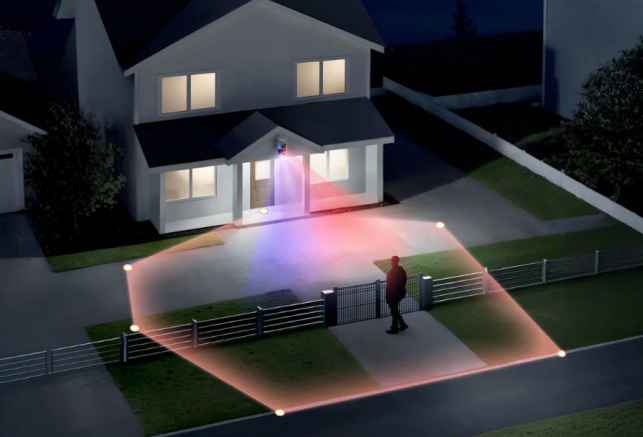
No-WiFi systems that rely on local processing avoid the lag and potential downtime of cloud-based AI. A local AI engine analyzes motion, identifies relevant subjects, and distinguishes threats—even when internet connectivity is unavailable. The S4 Max’s onboard AI agent uses multi-core computing power to scan scenes continuously, making decisions instantly. When a person enters a no-go zone or moves toward a restricted area, the AI flags the event and triggers a response. This local decision-making eliminates delays and ensures that footage continuity is matched by alert continuity. The system keeps functioning fully even in off-grid locations or during storms that impact connectivity.
Smart Search Tools That Improve Footage Retrieval
A continuous recording system is only useful when users can easily locate what they need. This is where local search functions support continuity beyond recording. Instead of browsing through hours of video, owners can search for keywords or specific behaviors. The S4 Max enables rapid retrieval by tagging motion events and indexing activity without a subscription. When reviewing recorded history, users experience a seamless timeline, free from the short interruptions commonly seen in Wi-Fi-dependent systems. This becomes essential for businesses or homeowners who need precise visual evidence for deliveries, incidents, or perimeter checks.
Environmental Durability That Prevents Physical Disruption
Footage continuity depends not only on internal systems but also on external conditions. Cameras installed outdoors face wind, rain, dust, and extreme temperature changes. Devices built with weather protection, such as IP65, withstand these conditions without shutting down or degrading image quality. Withstanding harsh environments ensures the system keeps capturing and storing high-resolution footage regardless of weather events. When paired with two-way talk and advanced noise reduction, the setup maintains usability in storms, busy areas, or remote properties. Even during rough weather, the system stays powered, stable, and communicative.
Conclusion
A no-Wi-Fi security system maintains continuous footage through a combination of stable power delivery, local storage, and real-time processing that does not depend on internet performance. Wired connections prevent data loss, while NVR storage preserves recordings even during outages. Multi-camera coordination ensures subjects remain visible from one frame to the next. Local AI adds intelligent decision-making, from identifying threats to supporting detailed video searches. The eufy PoE NVR Security System S4 Max demonstrates how these elements work together, offering synchronized tracking, triple-lens visibility, onboard intelligence, and expandable storage for uninterrupted monitoring. When users rely on a no-Wi-Fi setup, they gain a resilient, always-active security solution designed for environments where uptime matters most.
- share:

-



Related Articles
Hot Articles





Under what conditions can you have an inflatable jacuzzi on its terrace or balcony?
24/06/2022
6269Views



Find out how to remove the tartar on your dog's teeth
Quels Accessoires Connectés Huawei Sont en Promotion pour ce Black Friday?
Under what conditions can you have an inflatable jacuzzi on its terrace or balcony?
Grass mower a perfect lawn!